In the most biodiverse marine ecosystems in the world, SeaWeb's Asia Pacific program is strengthening voices for ocean conservation by bridging the worlds of marine science, journalism, and public policy. We work to amplify and clarify the messages of local scientists and ocean experts, and to connect journalists and decision-makers to ocean issues and specialists.

We envision an Asia Pacific region where all people will act on the belief that a healthy ocean is vital to human life and a sustainable future.

Tuesday, June 19, 2007

Coral decision reversed: we're not giving up

At this point, you all know that, following a massive lobbying effort by our opponents, the delegates to the CITES convention voted, at the last minute and by secret ballot, to reverse the decision to list Corallium on Appendix II.

I want to emphasize that this only redoubles our commitment to the important work ahead of us on the Too Precious to Wear campaign. We have a lot to be proud of that came out of the conference, particularly in the relationships we built and the way we have connected our name to the issue.

If you did not see it before, here is the press release we issued immediately after the decision:
COUNTRIES REVERSE DECISION TO PROTECT PRECIOUS RED CORALS
Conservationists decry move as politically motivated; urge industry and range states to act

(June 15, 2007 - The Hague, The Netherlands) Scientists, conservationists and many government officials expressed outrage when a proposal to protect precious red corals from international trade was reversed today. Delegates voted by secret ballot to overturn their initial decision to list these overfished species under the Convention on International Trade in Endangered Species (CITES), following a massive lobbying effort by the coral industry and some exporting countries. The proposal initially passed on Wednesday, with 62 countries voting in support of the listing.

Scientists have long called for trade protection for red corals (scientific name: Corallium / AKA: pink corals), with over 2,000 other coral species listed under CITES. Red corals are among the world’s most valuable wildlife commodities, with a finished necklace retailing for up to $20,000. But destructive fishing methods and over-harvesting means global red coral catches have plummeted by 90 percent in the past two decades. The move to reopen the red coral debate on Friday in a plenary session was instigated by Tunisia and seconded by Algeria and Morocco, all coral exporting countries. A secret ballot was requested and despite the proposal receiving support from the majority of delegates present, it fell short of the required two-thirds majority needed for a CITES listing.

Dr. Andy Bruckner, a NOAA scientist and the author of the U.S. proposal to list Corallium, said the outcome was shocking: “Over the past twenty years, overfishing of red coral has put these animals at great risk. A CITES listing would have helped safeguard the species as well as the coral industry. Effective conservation for red coral now requires cooperation by range states to implement appropriate domestic measures, to ensure the survival of these species."

The U.S. responded to the reopening of the debate, saying they had held extensive conversations with red coral-producing nations to construct a proposal that would advance the conservation of the species.

The unusual reversal, which took place after the conference was scheduled to have ended, means the trade in red corals will be allowed to continue unchecked, threatening the species’ survival. There was significant support for the listing from the United States (the largest red coral importer in the world), the European Union (a major exporter), Mexico, the CITES Secretariat, as well as numerous NGOs, including SeaWeb, TRAFFIC, WWF and the Pew Institute for Ocean Science.

Opponents to the red coral proposal, such as Japan, a major red coral trading nation, and industry group ASSOCORAL, referred to an FAO assessment that did not support the listing. SeaWeb stated to delegates at the conference that FAO’s analysis was flawed because it only took into account the remaining number of coral colonies but not their size, which is a more accurate measure of population health.

Dawn M. Martin, president of SeaWeb, the international NGO that originally petitioned the United States to propose the listing, said, “Never before have our oceans been in such peril, and this reversal by CITES delegates, which leaves red corals unprotected, is deplorable. Red corals are threatened by trade and fully meet the criteria for CITES protection. It is now up to consumers and the industry to ensure that we do not love red coral to death. Conscientious jewelers like Tiffany & Co. have already removed precious corals from their product lines, and we urge others to do the same.”

The value of the red coral trade is significant. In 1999 alone, the Italian town of Torre del Greco reported red coral profits of $174 million. The United States, the world’s largest documented importer of red corals, and conservationists said the protection afforded by a CITES listing would have safeguarded the industry for future generations by ensuring trade is non-detrimental to the survival of the species.

Science shows that commercial fishing has decreased the genetic diversity within and among populations, reduced colony densities, and shifted size and age structure to small, immature colonies that are worthless to the red coral trade and unproductive in the ecosystem. In the Pacific Ocean, the destructive fishing method of bottom trawling for red coral is the marine equivalent of clear cutting old-growth forests. There is evidence that coral populations never fully recover after being bottom-trawled, and entire beds of red coral have been depleted within five years of discovery.

Fernanda Kellogg, senior vice president of Tiffany & Co. and president of The Tiffany & Co. Foundation, said, “With regard to coral, we believe that coral harvesting as currently practiced is not sustainable and threatens marine ecosystems. We will not use this precious material in our jewelry until harvesting methods have been adopted that ensure the sustainability of coral reefs.”

Martin added, “We will continue to work tirelessly to get these threatened animals the protection they deserve. It is unconscionable when politics and profit stand in the way of science and conservation. SeaWeb’s Too Precious To Wear campaign will continue to advance coral conservation and we will urge the international community to protect these species before it is too late.”

For more information, visit www.tooprecioustowear.org. Too Precious to Wear is a program of SeaWeb to create a demand for coral conservation.
I am happy to talk about this more and answer any questions you may have. We are all disappointed, but not surprised. We are fighting big industry interests, but we are going to make a difference, you'll see!

Thursday, June 14, 2007

Thanks to Rick MacPherson!

Just saw this great post over at the Malaria, Bedbugs, Sea Lice and Sunsets blog!

There's some reason to celebrate today. This week, the Convention on International Trade in Endangered Species of Wild Fauna and Flora, or CITES (pronounced sight-eeze), is meeting in The Hague. CITES is an international agreement between governments that aims to ensure that international trade in specimens of wild animals and plants does not threaten their survival. The reason I'm feeling celebratory is that red and pink corals (genus Corallium) received international trade protection today after 62 countries voted to list these over-harvested species under the CITES Appendix II listing.

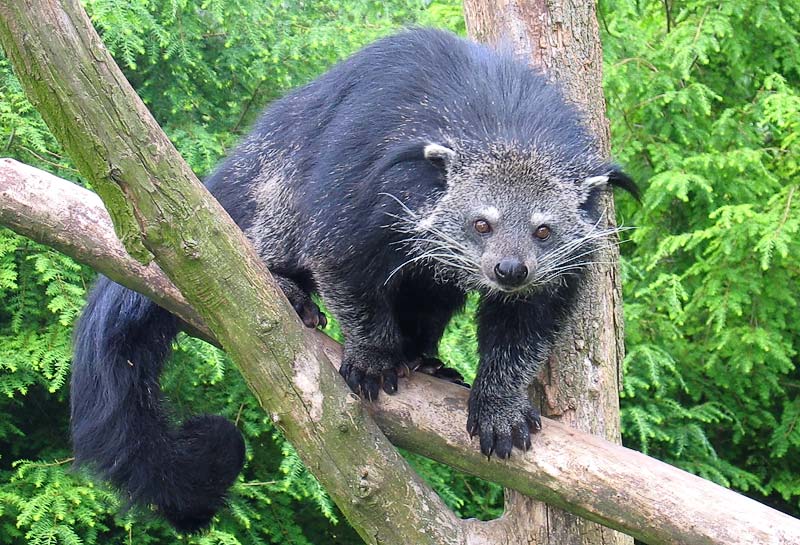
CITES can confer listing of species as either Appendix I, II, or III. Appendix I includes species threatened with extinction. Trade in specimens of these species is permitted only in exceptional circumstances (usually having something to do with research and conservation). So if you were hoping to receive a Spiny Echidna, Honey Badger, or Binturong for your birthday, forget it... they are all Appendix I listed. Appendix II includes species not necessarily threatened with extinction, but in which trade must be controlled in order to avoid depletion of the species or elevation to Appendix I status. Appendix III contains species that are protected in at least one country, which has asked other CITES Parties for assistance in controlling the trade.

The U.S. government had originally proposed that CITES list red and pink coral species on Appendix II of CITES. This newly approved designation will require that any government that exports or imports items made of red and pink coral demonstrate that trade in these species does not adversely impact its future survival.

Consumer items made from red and pink coral are very popular right now in the form of jewelry and decorative items. With a finished necklace retailing for up to $20,000 US, precious red corals are among the world’s most valuable wildlife commodities. Since 2005 there has been a worldwide resurgence in coral popularity, and it is in high demand for jewelry, art and curios, particularly in Europe and Asia. An Appendix II listing will be a strong step to improve the monitoring and tracking of red coral trade. There are also interactions between this potential ruling and bottom trawling regulations.

To help spread the word and build public awareness of this issue, SeaWeb has launched a fantastic new campaign, Too Precious To Wear. The beautiful logo (pictured at the top of this post) is specifically designed to capture the eye and attention of consumers. Beyond just designing a pretty logo, SeaWeb has secured the support and commitment of The Tiffany & Co. Foundation. Tiffany & Co. (begin humming Moon River here) is arguably the world's preeminent retailer of exquisitely designed, high-value jewelry. Recognizing the growing demand for jewelry materials sourced sustainably and ethically (think Blood Diamond) from the land and ocean (diamonds, pearls, coral, shell, etc.) the company established an environmental policy. Their environmental statement reads that,
It is from nature that Tiffany & Co. draws the raw materials and inspiration that have shaped the company's design heritage. The mission of the foundation's Environment Program is to support organizations dedicated to the conservation of natural resources in the areas of responsible mining, coral reef conservation, and land protection.
Way to go SeaWeb, and Tiffany & Co. Foundation! It's important to see big corporations like Tiffany not take the path of greenwashing. They're partnering with marine conservation organizations and investing to help preserve an ecosystem on which their company depends. When so much of the ocean environmental news is grim, the occasional good news like this is incredibly welcome. posted by Rick MacPherson at 12:23 PM

Wednesday, June 13, 2007

Important New Buoy Launched

From http://coralnotesfromthefield.blogspot.com/
NSF today announced that the first buoy to monitor ocean acidification has been launched in the Gulf of Alaska. If you've forgotten why the threat of ocean acidification keeps coral reef conservationists awake at night, refresh your memory here.
Anchored in water nearly 5,000 meters deep, the buoy (pictured above) began to transmit data via satellite once it hit the water. I'm guessing the oceanographers pictured atop the buoy are not permanently attached to the rig, but you never know with physical oceanographers. The instrument package attached to the buoy will, however, measure the air-sea exchange of carbon dioxide, oxygen and nitrogen gas in addition to the pH of the surface waters. Information from this buoy will lead to a better understanding of ocean acidification--a growing threat to the world's oceans--by helping scientists determine exactly how physical and biological processes affect carbon dioxide in the north Pacific Ocean, said Fred Lipschultz, program director in NSF's division of ocean sciences.

Initial Corallium vote - YES!

BREAKING NEWS: we have just witnessed the initial vote on the amended proposal to list Corallium on Appendix II of CITES and it passed!
The vote count was 62 in favor, 28 against, 13 abstentions. That represents 68.89% (66% is the cut-off for the 2/3 majority).
This will need to be confirmed in the plenary session tomorrow/Friday but is tremendously good news!

UN-Nippon Fellowship Programme

Please read, consider, and forward to your contacts, thank you!

The main objective of the Fellowship Programme is to provide advanced education and training in the field of ocean affairs and the law of the sea, and related disciplines including marine science, to government officials and other mid-level professionals from developing States. Thus, this programme provides a unique and fully funded opportunity for qualified individuals working within the RSPs to undertake research/studies in fields of direct relevance to RSPs.
Successful candidates will undertake their research/studies in two back-to-back phases: the first, lasting six months, with a participating academic host institution; and the second, lasting three months, with the Division for Ocean Affairs and the Law of the Sea (DOALOS), UN
Office of Legal Affairs, or an appropriate participating host institution. The Fellowship Selection Committee is currently scheduled to convene in early October 2007 to award ten fellowships for the 2008-2009 session, and successful candidates will be expected to begin
their placements early in 2008.
The fellowship application deadline is 15 August 2007, and candidates should forward their applications directly to DOALOS. Additional information, including the application package, detailed application instructions, and a list of participating host institutions, is
available on the Fellowship web-site: www.un.org/depts/los/nippon

Fellowship Programme Advisor Contact Information:
Mr. Francois N. Bailet, Ph.D.
Programme Advisor
Division for Ocean Affairs and the Law of the Sea
Office of Legal Affairs, DC2-0426
United Nations
New York, NY 10017, USA
Tel.: 917-367-5186
Fax: 212-963-5847
E-mail: bailet@un.org
Fellowship URL: http://www.un.org/depts/los/nippon

Tuesday, June 12, 2007

Pacific Island Conference for Nature Conservation and Protected Areas

Just to make sure we are all up to speed and have specific dates:
The 8th Pacific Islands Conference on Nature Conservation and Protected Areas, will take place in Alotau, PNG from 22 – 26 October 2007. The Conference’s theme, ‘Conservation serving communities, in a rapidly changing world’ highlights the inextricable link between Pacific islanders and the natural environment, and the importance of strengthening networks in the climate of global change.
I have stored the informational brochure and conference poster on our Google Groups site, and you can access them by following the embedded link above.

Sunday, June 10, 2007

First big Corallium press hit - version 2

U.S. pushes to protect red coral species

MIKE CORDER
Associated Press Writer

The U.S. is leading a push to protect a type of red coral that grows deep in the world's oceans and seas, putting it at odds with Italian fishermen who have harvested the species for generations to make artwork and jewelry.

Under the U.S. proposal up for debate at the Convention on International Trade in Endangered Species meeting in The Hague, trade in several species of red coral, or corallium, would be regulated for the first time to ensure harvesting and global sales do not threaten their survival.

The proposal is expected to come up for a vote next week, worrying the fishermen and craftsmen of Torre del Greco, who harvest the coral for their livelihood in the town in the shadow of Mount Vesuvius.

"We started 800 years ago and we want to continue," said Ciro Condito of Assocoral, a lobbying group representing the craftsmen in the Mediterranean town. "We are not an industry; this is our tradition, our culture. Coral is our life."

The U.S. is the world's biggest market for corallium products, importing more than 26 million pieces from 2001 to 2006, according to the Washington-based environmental group SeaWeb.

The value of corallium is boosted by the fact it is difficult to gather because it grows as deep as 3,280 feet. It is also rare because it grows so slowly - in some cases, just 0.06 inches or less per year - and takes up to seven years to reach maturity, with low reproduction rates.

Raw coral can sell for about $400 per pound at auction, and artworks or pieces of jewelry can cost anywhere from $20 to $20,000, depending on the size and quality.

One place corallium jewelry is no longer sold is Tiffany and Co.

"Until we are convinced that coral harvesting is sustainable and does not threaten marine ecosystems, we believe this cautionary principle should continue to apply," the company says on its Web site.

In some parts of the world, corallium is still harvested using trawl nets dragged along the seabed - a practice that devastates the coral and threatens other marine wildlife that use coral colonies as a place to feed, mate and escape predators.

"It is like clear-cutting a forest - it pulls everything up, there's a lot of loss and you remove the large colonies, the small colonies and cause a lot of damage to the habitat," said Andy Bruckner of the U.S. National Oceanic and Atmospheric Administration.

In the Mediterranean, trawl fishing has been replaced by scuba-diving harvesters and some countries have imposed quotas and minimum size limits. But the coral is still struggling.

"We're afraid that if things continue the way they are it could lead to species being depleted from large areas," said Bruckner.